Georgia Legislature Ends Special Session With Bill Delaying QR Code Ballot Ban
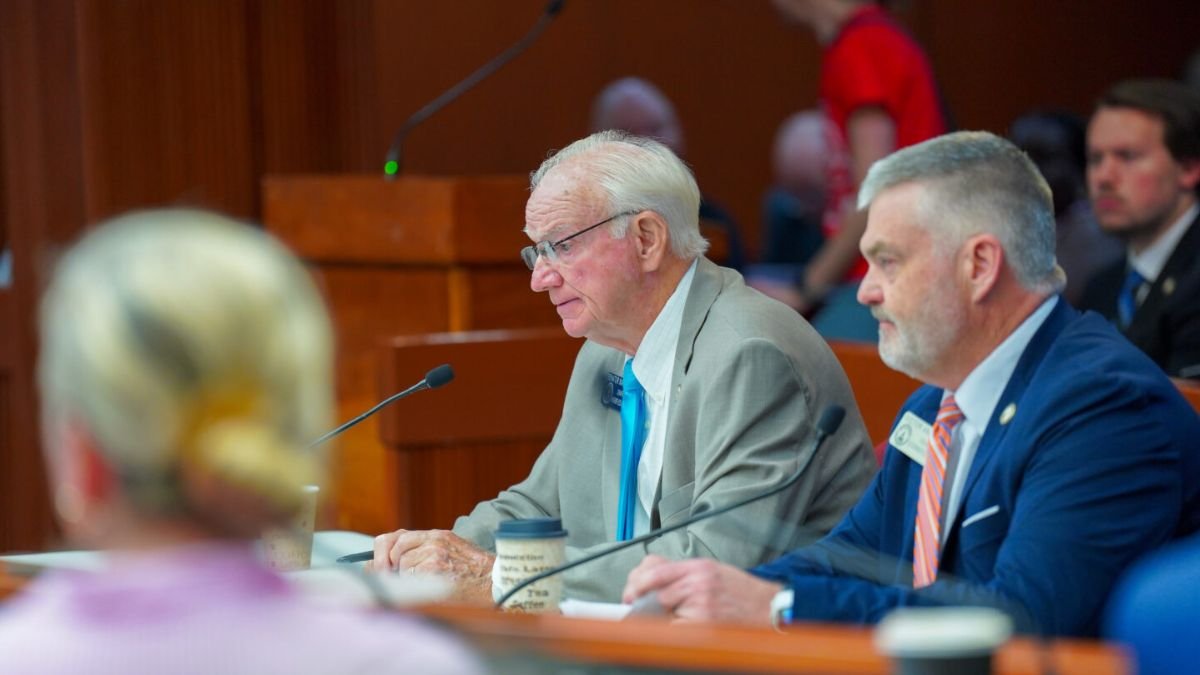
The Georgia legislature passed a bill Tuesday that would extend the use of QR codes on ballots until 2028 and require limited hand recounts in close statewide races.
The measure applies only to statewide offices such as governor, lieutenant governor and other state-level positions. It does not apply to federal races, including presidential elections.
The bill passed the House 94 to 79 and the Senate 36 to 16.
Hand Recounts Limited to Close Statewide Races
The final version of Senate Bill 3EX is narrower than an earlier proposal.
A previous version would have required hand recounts of the top two races on a ballot before certification, regardless of the margin. After objections from advocates and Democratic lawmakers, a House committee revised the bill.
Under the current version, hand recounts would only be required for the top two statewide races when the margin is within 0.5%. The recount must be completed within 17 days.
If signed into law by Gov. Brian Kemp, the changes would take effect immediately.
Special Session Focused on Election Rules
Georgia lawmakers met in a special session that ended Tuesday.
Kemp initially called the session in part because of questions around redistricting following the U.S. Supreme Court’s decision in Louisiana v. Callais, which raised concerns about protections under the Voting Rights Act. However, Republican leaders in both chambers ultimately chose not to take up redistricting because of uncertainty about how the ruling should be applied.
Instead, lawmakers addressed another major issue on Kemp’s agenda: how Georgia elections will be handled going forward.
QR Code Ballot Ban Delayed
A 2024 Georgia election law was set to ban QR code ballots starting in July.
However, lawmakers did not pass a replacement voting system during the regular session earlier this year. Senate Bill 3EX would push the QR code ballot deadline to 2028, giving the state more time to create a new system.
Advisory Committee to Study New Voting System
The bill also creates an advisory committee to recommend a new election system for lawmakers to consider during the 2027 legislative session.
Committee members would be appointed by the governor, the Senate Committee on Assignments and the speaker of the House.
The House committee also added language requiring the advisory committee to specifically study how to implement hand-marked paper ballots produced with ballot-on-demand printing.
Supporters Say Measure Could Build Voter Confidence
State Sen. Max Burns, a Republican from Sylvania and the bill’s author, said the proposal is meant to improve confidence in Georgia elections.
Burns said Georgia has used both manual counts and machine counts in the past and argued that both methods can work together to confirm final results.
After the bill was amended, Burns said he supported the final changes. He said no side gets everything it wants in the legislative process, but he believes the bill now reaches a practical outcome for Georgia.
Critics Warn Hand Counting Could Delay Certification
Advocates and Democratic lawmakers objected to the bill during Monday’s committee hearing.
They argued that hand recounting ballots could delay certification, produce less accurate results and increase costs for taxpayers.
Brittany Burns, an organizer with the Black Voters Matter Fund, said hand counting is more expensive, slower and more prone to errors than machine counting. She warned that it could slow election results and create certification problems.
Some Democrats Supported the Bill Despite Concerns
Although many Democrats opposed the hand recount provision, some still voted for the bill to avoid confusion over Georgia’s voting system after the July QR code deadline.
Senate Minority Leader Harold Jones said he considered the special session largely successful. He said some Senate Democrats supported SB 3EX because they did not want the state to face chaos without a clear voting system in place.
Jones said the vote was not an easy decision, but lawmakers had to prevent a larger risk if no election system solution was approved.
Democrats Still Object to Key Provisions
Several Democrats continued to oppose the bill, especially because it still includes hand recounts.
State Rep. Gabriel Sanchez, a Democrat from Smyrna, said hand recounts will likely produce slightly different totals from the original count because of human error, not fraud. He said thousands of people manually counting millions of ballots would inevitably create inconsistencies.
Other Democrats argued the bill revisits disputes from the 2020 presidential election and echoes claims by President Donald Trump that Georgia voting machines counted votes inaccurately.
State Rep. Jasmine Clark, a Democrat from Lilburn, said lawmakers were spending time rearguing 2020 election denial claims while presenting the bill as election integrity.
Concerns Raised About Advisory Committee Balance
Some Democrats also questioned whether the advisory committee would be bipartisan.
State Rep. Stacey Evans, a Democrat from Atlanta, asked why the bill did not require intentional bipartisan balance or recommendations from the minority party.
State Rep. Victor Anderson, a Republican from Cornelia and chairman of the House Governmental Affairs Committee, said he trusted House Speaker Jon Burns to make bipartisan appointments.
Anderson said House study committees typically include members from both parties and that he believes the speaker will handle appointments appropriately.
Homestead Tax Referendums Fail to Advance
Another issue on Kemp’s special session agenda involved local referendums on homestead tax exemptions for November ballots.
Earlier this year, Kemp signed Senate Bill 33, which allows local governments to raise sales taxes to fund property tax cuts through homestead exemptions. The sales tax is called a Local Homestead Option Sales Tax. Residents would need to approve the exemption through a majority vote in a referendum.
Republicans argued voters should be allowed to decide whether they want the property tax measure.
State Sen. Bo Hatchett, a Republican from Cornelia, said lawmakers should put the issue on the ballot and let residents vote.
However, lawmakers failed to reach the required two-thirds majority needed to place the local referendums on November ballots.
State Rep. David Wilkerson, a Democrat from Powder Springs, opposed the plan, saying it would create a new sales tax on food and everyday purchases. He argued that tax relief should not come through another tax.
Georgia lawmakers passed Senate Bill 3EX to extend QR code ballot use until 2028 and require hand recounts only in close statewide races. Supporters say the measure gives Georgia more time to develop a replacement voting system and may strengthen voter confidence. Critics warn that hand counting could be costly, slow and less accurate. Meanwhile, lawmakers failed to advance local homestead tax exemption referendums during the special session.