Georgia Is Rapidly Losing Farmland. Can a State Conservation Fund Help Save It?
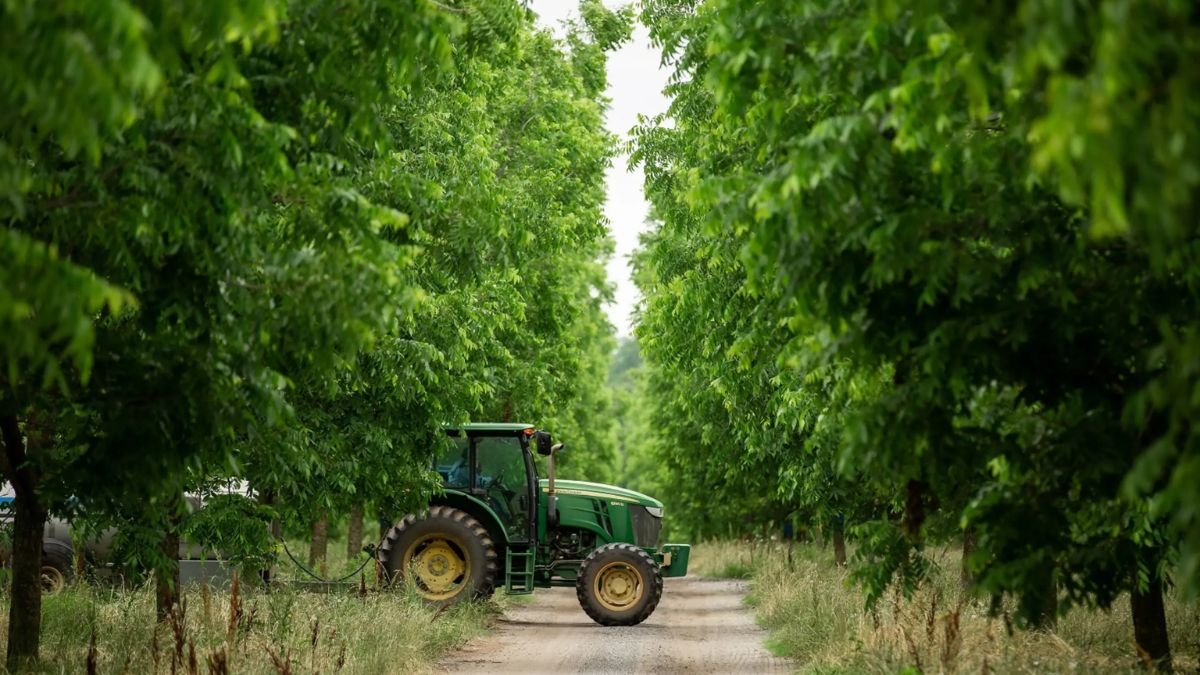
Georgia lawmakers have approved $2 million for the first year of the Georgia Farmland Conservation Fund, a new program designed to help protect farmland from being converted into housing developments, warehouses, data centers, industrial projects, and other non-agricultural uses.
Farm landowners from across Georgia have already applied for a share of the funding. Applicants are expected to learn in August whether their proposals have been selected.
The coverage of this issue comes through a partnership between Grist and WABE, Atlanta’s NPR station.
How the Farmland Conservation Program Works
Georgia’s new initiative is modeled after similar agricultural conservation easement programs already operating in about 30 states. These programs are often known as purchase of agricultural conservation easement programs.
Funding levels differ widely from state to state. For example, Texas provides $2 million each year, while Florida set aside $300 million in 2022 and another $100 million in 2024.
Georgia passed its farmland conservation law in 2023. The law created a formal structure to combine federal, state, and local matching funds. It also established an advisory council responsible for reviewing and approving conservation proposals.
The Georgia Legislature approved the first round of funding in 2024, and the first application period closed on May 20.
What Conservation Easements Mean for Farmers
A conservation easement allows a landowner to sell the future development rights to their property while still keeping ownership of the land. These rights are usually purchased by an organization such as a land trust.
An appraisal determines the value of the development rights. After that, the farmer and the easement holder negotiate the specific terms of the agreement.
The landowner receives an upfront payment. Under Georgia’s program, half of that payment comes from state funding, while the rest must come from matching funds. Those matching dollars may be provided by a land trust, a local government, or the U.S. Department of Agriculture, which provides $450 million each year to match state conservation funding.
Importantly, the landowner can continue using the land for farming, timber harvesting, or other existing purposes. The property can also still be sold in the future, but it cannot be sold for development into subdivisions, strip malls, industrial sites, or similar projects.
A Financial Alternative for Pressured Farmers
Supporters of the program say it gives farmers another option at a time when many are facing financial strain and constant offers from developers.
Katherine Moore, president of the Georgia Conservancy, said the fund creates a strong alternative for farming families who are under pressure to sell. She explained that many landowners are dealing with economic challenges while also being flooded with offers to give up their land.
Those offers can vary dramatically based on location, development potential, and local demand. According to a 2025 report by Saunders Land, sale prices for transitional land — property shifting from one use to another — ranged from just over $6,000 per acre to more than $260,000 per acre.
The value of a conservation easement can also differ greatly. However, landowners usually receive less money from an easement than they would from selling the property outright, because they are selling only development rights rather than the land itself.
Georgia Farmer Wants to Keep Family Land in Agriculture
One farmer watching the issue closely is Russ Moon, who grows corn, soybeans, and strawberries and raises cattle on his family farm in Madison County, Georgia, outside Athens.
Moon’s family has worked the same land for four generations, or about 100 years. He hopes to continue farming and eventually pass the land on to his children.
Over the years, Moon said he has seen more housing and development move into the area. He noted that many people are attracted to Madison County because it is close to the University of Georgia in Athens while still offering a rural lifestyle.
However, he worries that rapid growth could permanently change the character of the community. Some nearby farms have already been sold, and Moon fears that unchecked development could reshape the area for good.
For his own family, Moon said selling the land is not part of the plan. He intends to stay in agriculture for as long as possible.
Why Easements Matter for Future Generations
Moon said he would only consider selling if circumstances forced him to do so. Farming can be unpredictable, with weather, crop prices, and global markets all affecting income and stability.
He also recognizes that his children may one day face difficult choices when they inherit the farm. Even if a sale becomes necessary in the future, Moon said his family does not want the land turned into development.
Part of Moon’s property has already been placed in a conservation easement through a direct agreement with a land trust in 2019. Georgia’s new fund is intended to help more farmers protect land in a similar way by making state money available to support easement deals.
Georgia Agriculture Faces Major Development Pressure
Moore described the new conservation fund as a crucial and historic step for Georgia. She said it is remarkable that the state has not previously had such a program, especially considering the importance of agriculture to Georgia’s economy.
Agribusiness is considered Georgia’s number one economic engine, yet farmland continues to face growing development pressure.
According to the Georgia Department of Agriculture, the state could lose around 800,000 acres of farmland by 2040.
Georgia Agriculture Commissioner Tyler Harper said that would mean roughly 10 percent of the state’s farmland could disappear within the next 15 years. He called that projection a staggering figure.
Climate Concerns Linked to Farmland Loss
The issue is not only economic. Farmland supports food production, rural jobs, local communities, and Georgia’s agricultural identity. It also plays a role in climate and environmental stability.
According to the American Farmland Trust, converting farmland to other uses can increase greenhouse gas emissions. Development often requires removing topsoil before land is paved, which can release stored carbon.
Low-density housing developments, warehouses, and industrial operations may also produce more emissions than farming. Conservation easements can help reduce that risk by keeping land in agricultural use.
They may also support farming and land management practices that store more carbon. In many cases, easements also protect nearby natural areas such as woods, wetlands, and other open spaces connected to farmland.
Development Growth Creates a Difficult Balance
Georgia leaders often celebrate the state’s strong economy and frequently call it the number one state for business. However, Moon said that growth can come at a cost if it undermines agriculture.
He argued that while Georgia promotes itself as a top place to do business, the state may also be damaging its most important industry.
For Moon, the loss of farmland is often permanent. Once land is developed, he said, it is unlikely to ever return to agricultural use. In his view, once farmland is gone, it is gone forever.
Georgia’s new Farmland Conservation Fund marks an important step toward protecting agricultural land from rapid development. With $2 million allocated for the first year, the program gives farmers a financial option that allows them to preserve their land while continuing to farm.
As Georgia faces the possible loss of hundreds of thousands of acres of farmland by 2040, conservation easements may become a key tool for balancing economic growth, climate concerns, rural heritage, and the future of agriculture in the state.