Georgia Republicans Refuse to Redraw Congressional Map Despite Trump’s Push
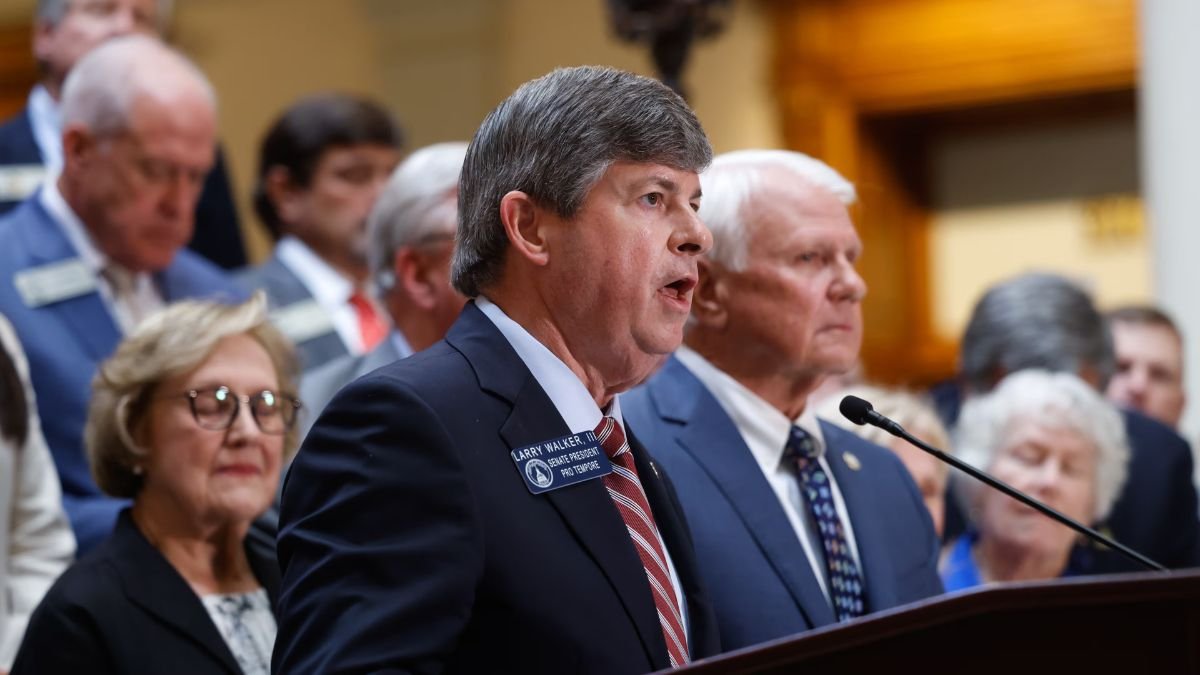
Georgia Republicans have chosen not to redraw the state’s congressional map during a special legislative session, resisting pressure from Donald Trump for a broad redistricting effort after a recent U.S. Supreme Court ruling weakened a key part of the Voting Rights Act.
The decision marks a more cautious approach from Georgia GOP leaders at a time when some Republican-led states have moved quickly to revise voting districts in ways that could benefit the party ahead of future congressional elections.
Jon Burns Says Georgia Needs a Careful Process
Georgia House Speaker Jon Burns defended the decision, saying lawmakers should handle the issue in what he described as “the Georgia way” — responsibly, openly, and with enough time for public feedback.
Burns said the timeline was too rushed and that lawmakers still did not fully understand the impact of the Supreme Court’s April ruling, which reduced protections for minority voters under the Voting Rights Act. That ruling triggered a wave of Republican interest in redistricting as the party seeks to protect its narrow majority in the U.S. House of Representatives.
While Trump has urged states to act quickly, not all Republican-led states have responded at the same pace.
Brian Kemp Called Session With 2028 in Mind
Georgia Governor Brian Kemp called the special session, but not specifically to redraw congressional districts for the upcoming 2026 elections. Instead, the focus was tied more to elections in 2028, separating Georgia’s approach from states that are moving quickly for the next election cycle.
Speaking to reporters on Wednesday, Burns also said the legislature had other urgent issues to address. These included restoring a moratorium on gasoline taxes, exploring ways to reduce property taxes, and fixing part of a 2024 law that could create uncertainty over the legality of vote-counting machines before the November election.
Burns stressed that changes to district maps could affect every voter in Georgia. For that reason, he argued that citizens deserve a careful, accurate, and transparent process with a real chance to be heard.
Democrats Protest Redistricting Possibility
The possibility of congressional redistricting brought Democratic opposition to the Georgia Capitol. Raphael Warnock, the U.S. senator from Georgia and a leading Democrat, returned to the state to speak out against the potential effort.
Justin Jones, a Nashville state representative who helped lead opposition to redistricting in Tennessee, also appeared at the Georgia Capitol in Atlanta. Tennessee passed new maps in May, and Jones used his presence in Georgia to raise awareness about the issue.
State Legislative Redistricting Also Raised Concerns
Congressional redistricting was not the only issue under discussion. Redrawing Georgia state House and state Senate districts was also a possibility, and some observers believe that risk may have made Republican lawmakers more cautious.
Former state Representative Teri Anulewicz said Republicans may have already done as much as they realistically could during the state’s 2023 redistricting process. That earlier effort helped strengthen the electoral position of some Republican lawmakers in metro Atlanta, even as the area continued shifting away from the GOP.
Anulewicz said Georgia remains a swing state in a political environment that could favor Democratic gains. She added that the state House majority is vulnerable enough that Republican caution was not surprising.
Republicans Emphasize Deliberation
Republican state Representative Mark Newton, who represents the suburban Augusta area, said Burns’ position reflects the broader view of the Republican caucus.
Newton described Burns as a leader who prefers a deliberate process rather than rushed action. He pointed out that Georgia lawmakers often use study committees during the months when the legislature is not in session to examine complex issues more thoroughly.
Newton also said that past redistricting efforts in Georgia involved meetings and feedback from multiple groups, suggesting that any future map changes should follow a similar process.
Georgia Republicans’ decision not to immediately redraw congressional districts shows a cautious break from Trump’s push for fast redistricting after the Supreme Court’s Voting Rights Act ruling. While GOP leaders cited transparency, public input, legal uncertainty, and other legislative priorities, political risks also appear to be part of the calculation. With Georgia remaining a competitive swing state, any changes to district maps could carry major consequences for both parties in future elections.