More Than Half of Georgia Teachers Now Use AI to Prepare for Class
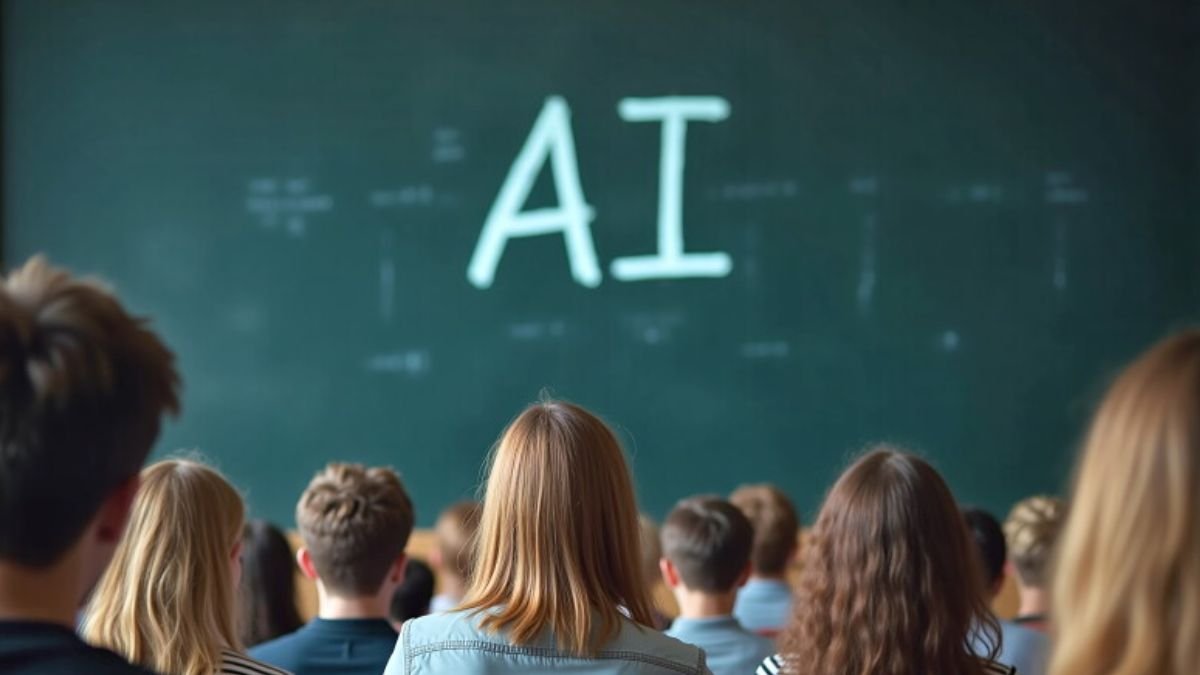
A new report from the Georgia Department of Audits and Accounts shows that many teachers across the state are already using generative artificial intelligence for classroom planning and instruction.
The findings are based on more than 13,000 teacher responses from across Georgia. According to the survey, 59% of responding teachers said they use AI for teaching-related tasks.
At the same time, many educators said they worry that student use of AI could weaken learning, encourage cheating or reduce critical thinking.
Teachers Mainly Use AI for Lesson Planning
Teachers were most likely to use AI for preparing classroom materials.
Among surveyed educators, 95% said they used AI for instructional planning and preparation at least a few times a year. More than half reported using it at least once per week.
Venecia Whyte-Foster, a middle school English teacher in Savannah-Chatham County, said she adopted AI early because she believed the technology was not going away. She said her goal was to figure out how to use it effectively in her classroom, knowing students would likely use it too.
AI Used to Create Interactive Classroom Activities
Whyte-Foster said one of her approaches involves creating personalized chatbots that turn lessons into escape room-style activities.
Students must ask questions connected to the topic, receive new information from the chatbot, answer follow-up questions and solve problems before moving to the next level.
She said students enjoy the challenge and like competing to be the first to complete the activity.
Teachers Hesitant to Use AI for Grading
While many educators use AI for planning and engagement, they are more cautious about using it to grade student work.
The survey found that 62% of teachers said they never use AI for grading.
Among teachers who do use AI, nearly 90% said it has had a positive effect in their classrooms. Many said the technology saves time, improves lesson materials and helps boost student participation.
Some Teachers Worry AI Could Hurt Learning
Teachers who do not use AI told state analysts they are concerned it may lead students to rely too much on technology.
Some said AI could weaken critical thinking, encourage cheating or make students less motivated to do their own work. Educators also raised concerns about inaccurate AI responses, student data privacy and broader ethical questions.
UGA Professor Urges Teachers to Stay Open-Minded
Xiaoming Zhai, an associate professor at the University of Georgia and director of the university’s AI4STEM Education Center, said he understands why some teachers are skeptical of AI.
However, he said educators should remain open to learning how the technology works because students will likely use AI in their future careers.
Zhai said teachers need guidance on how to use AI responsibly and ethically so they can help students understand both the benefits and risks of the technology.
Older Students More Likely to Use AI
Elementary school teachers told auditors their students were least likely to use AI for school assignments.
AI use appears to increase as students get older. A majority of high school teachers reported that their students use AI on assignments at least half of the time.
Teachers whose students use AI were more likely to say the technology has hurt learning. A majority of middle and high school teachers said AI has had either a somewhat negative or very negative effect on student learning.
Teachers Try to Manage Student AI Use
More than half of surveyed teachers said they require in-class work or writing assignments to better manage student AI use.
About half said they clearly explain what counts as AI misuse or cheating. Another 43% said they use software or apps to check whether students used AI on assignments.
Teaching Students About AI Hallucinations
Whyte-Foster said she teaches students about AI hallucinations, which happen when AI produces an answer that sounds confident but is inaccurate or completely fabricated.
She said students must learn that AI should not replace their own thinking. Instead, it should be treated as a tool for gathering ideas, checking information and supporting brainstorming.
Even with those lessons, she said some students still try to submit AI-generated work as their own.
Academic Integrity Still a Challenge
Whyte-Foster said she can often identify AI-written assignments because she knows her students’ writing abilities from in-class work.
When she finds AI-generated work, she talks with the student about academic integrity and gives them a chance to redo the assignment for a reduced grade.
She said students usually prefer earning a lower passing grade over receiving a zero, and the process helps show them they were capable of doing the work themselves.
Training and Guidance Vary Across Georgia
About two-thirds of teachers surveyed said they had received guidance on AI use. Around 70% said they had received training, while 27% said they had received neither training nor guidance.
Auditors found inconsistent responses within districts. Some teachers reported receiving training or guidance, while others in the same district said they had not.
The report suggested this could mean some teachers were unaware of available district resources, or that training was offered to only certain educators. Teachers in high-poverty districts were more likely to report receiving no AI training or guidance.
AI in K-12 Education Not Yet Covered by Law
The use of AI in K-12 education is not currently addressed in federal or Georgia state law.
However, the Georgia Department of Education and the Georgia Professional Standards Commission, which licenses teachers, have both developed guidance on AI use.
In January 2025, the state Department of Education appointed an AI ethics and impact officer and released best-practice guidance for schools.
State Superintendent Says AI Should Be a Tool
State School Superintendent Richard Woods said AI use in education must involve serious consideration of ethical, instructional and privacy concerns.
Woods, a Republican running for re-election in November, said he does not want AI to replace teacher expertise or prevent students from developing critical thinking skills.
He said AI should always be used as a tool, not as a substitute for teachers or student learning.
Georgia teachers are increasingly using AI for lesson planning, classroom activities and student engagement, but concerns remain about cheating, accuracy, privacy and learning loss. The state audit shows both promise and caution, with many educators seeing AI as useful while others worry about its long-term impact. As AI use grows in schools, training, guidance and clear ethical rules will likely become more important for teachers and students.