Georgia Is Rapidly Losing Farmland. Can a State Conservation Fund Help Save It?

Georgia lawmakers have approved $2 million for the first year of the Georgia Farmland Conservation Fund, a new program designed to help protect farmland from being converted into housing developments, warehouses, data centers, industrial projects, and other non-agricultural uses.
Farm landowners from across Georgia have already applied for a share of the funding. Applicants are expected to learn in August whether their proposals have been selected.
The coverage of this issue comes through a partnership between Grist and WABE, Atlanta’s NPR station.
How the Farmland Conservation Program Works
Georgia’s new initiative is modeled after similar agricultural conservation easement programs already operating in about 30 states. These programs are often known as purchase of agricultural conservation easement programs.
Funding levels differ widely from state to state. For example, Texas provides $2 million each year, while Florida set aside $300 million in 2022 and another $100 million in 2024.
Georgia passed its farmland conservation law in 2023. The law created a formal structure to combine federal, state, and local matching funds. It also established an advisory council responsible for reviewing and approving conservation proposals.
The Georgia Legislature approved the first round of funding in 2024, and the first application period closed on May 20.
What Conservation Easements Mean for Farmers
A conservation easement allows a landowner to sell the future development rights to their property while still keeping ownership of the land. These rights are usually purchased by an organization such as a land trust.
An appraisal determines the value of the development rights. After that, the farmer and the easement holder negotiate the specific terms of the agreement.
The landowner receives an upfront payment. Under Georgia’s program, half of that payment comes from state funding, while the rest must come from matching funds. Those matching dollars may be provided by a land trust, a local government, or the U.S. Department of Agriculture, which provides $450 million each year to match state conservation funding.
Importantly, the landowner can continue using the land for farming, timber harvesting, or other existing purposes. The property can also still be sold in the future, but it cannot be sold for development into subdivisions, strip malls, industrial sites, or similar projects.
A Financial Alternative for Pressured Farmers
Supporters of the program say it gives farmers another option at a time when many are facing financial strain and constant offers from developers.
Katherine Moore, president of the Georgia Conservancy, said the fund creates a strong alternative for farming families who are under pressure to sell. She explained that many landowners are dealing with economic challenges while also being flooded with offers to give up their land.
Those offers can vary dramatically based on location, development potential, and local demand. According to a 2025 report by Saunders Land, sale prices for transitional land — property shifting from one use to another — ranged from just over $6,000 per acre to more than $260,000 per acre.
The value of a conservation easement can also differ greatly. However, landowners usually receive less money from an easement than they would from selling the property outright, because they are selling only development rights rather than the land itself.
Georgia Farmer Wants to Keep Family Land in Agriculture
One farmer watching the issue closely is Russ Moon, who grows corn, soybeans, and strawberries and raises cattle on his family farm in Madison County, Georgia, outside Athens.
Moon’s family has worked the same land for four generations, or about 100 years. He hopes to continue farming and eventually pass the land on to his children.
Over the years, Moon said he has seen more housing and development move into the area. He noted that many people are attracted to Madison County because it is close to the University of Georgia in Athens while still offering a rural lifestyle.
However, he worries that rapid growth could permanently change the character of the community. Some nearby farms have already been sold, and Moon fears that unchecked development could reshape the area for good.
For his own family, Moon said selling the land is not part of the plan. He intends to stay in agriculture for as long as possible.
Why Easements Matter for Future Generations
Moon said he would only consider selling if circumstances forced him to do so. Farming can be unpredictable, with weather, crop prices, and global markets all affecting income and stability.
He also recognizes that his children may one day face difficult choices when they inherit the farm. Even if a sale becomes necessary in the future, Moon said his family does not want the land turned into development.
Part of Moon’s property has already been placed in a conservation easement through a direct agreement with a land trust in 2019. Georgia’s new fund is intended to help more farmers protect land in a similar way by making state money available to support easement deals.
Georgia Agriculture Faces Major Development Pressure
Moore described the new conservation fund as a crucial and historic step for Georgia. She said it is remarkable that the state has not previously had such a program, especially considering the importance of agriculture to Georgia’s economy.
Agribusiness is considered Georgia’s number one economic engine, yet farmland continues to face growing development pressure.
According to the Georgia Department of Agriculture, the state could lose around 800,000 acres of farmland by 2040.
Georgia Agriculture Commissioner Tyler Harper said that would mean roughly 10 percent of the state’s farmland could disappear within the next 15 years. He called that projection a staggering figure.
Climate Concerns Linked to Farmland Loss
The issue is not only economic. Farmland supports food production, rural jobs, local communities, and Georgia’s agricultural identity. It also plays a role in climate and environmental stability.
According to the American Farmland Trust, converting farmland to other uses can increase greenhouse gas emissions. Development often requires removing topsoil before land is paved, which can release stored carbon.
Low-density housing developments, warehouses, and industrial operations may also produce more emissions than farming. Conservation easements can help reduce that risk by keeping land in agricultural use.
They may also support farming and land management practices that store more carbon. In many cases, easements also protect nearby natural areas such as woods, wetlands, and other open spaces connected to farmland.
Development Growth Creates a Difficult Balance
Georgia leaders often celebrate the state’s strong economy and frequently call it the number one state for business. However, Moon said that growth can come at a cost if it undermines agriculture.
He argued that while Georgia promotes itself as a top place to do business, the state may also be damaging its most important industry.
For Moon, the loss of farmland is often permanent. Once land is developed, he said, it is unlikely to ever return to agricultural use. In his view, once farmland is gone, it is gone forever.
Georgia’s new Farmland Conservation Fund marks an important step toward protecting agricultural land from rapid development. With $2 million allocated for the first year, the program gives farmers a financial option that allows them to preserve their land while continuing to farm.
As Georgia faces the possible loss of hundreds of thousands of acres of farmland by 2040, conservation easements may become a key tool for balancing economic growth, climate concerns, rural heritage, and the future of agriculture in the state.
U.S.-Iran Deal Raises Big Questions While Trump Concludes G7 Summit and Georgia Primary Results Emerge
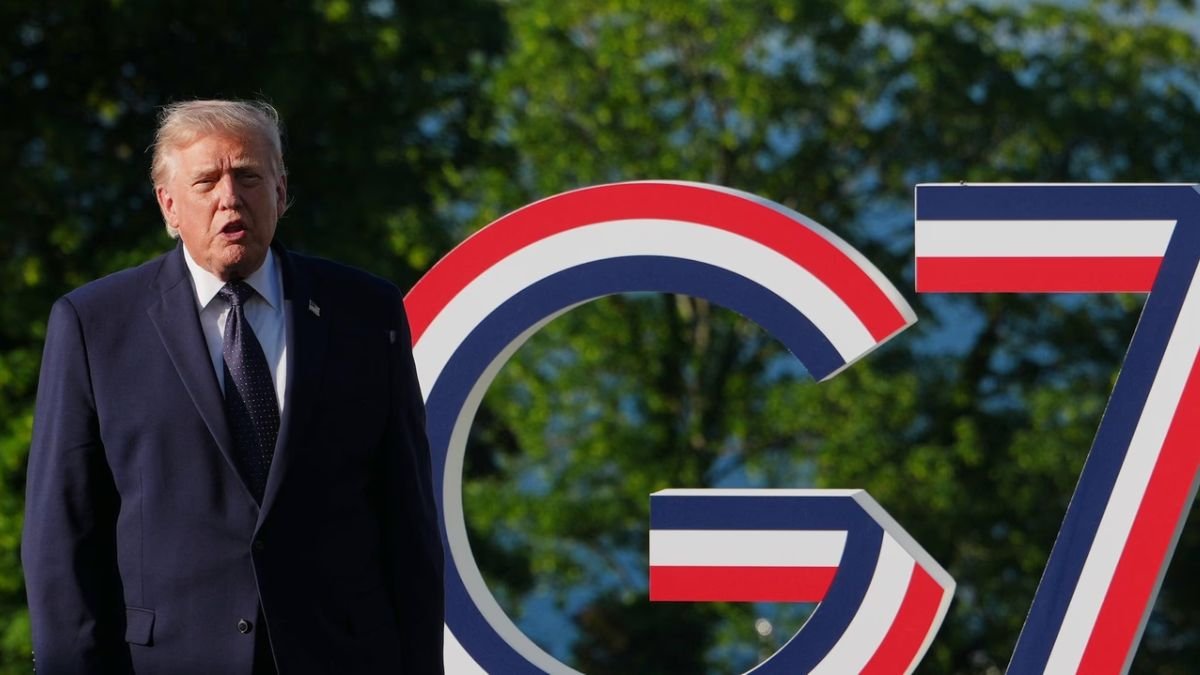
The United States and Iran have reportedly reached an agreement to end the war, but the actual text of the deal has not been made public. The secrecy surrounding the agreement has created fresh questions in Washington and beyond.
Israel has not been allowed to review the document, while members of Congress are now asking to see the terms for themselves. Key concerns remain unresolved, including what will happen to billions of dollars in frozen Iranian funds and how the deal may affect the ongoing fighting in Lebanon.
Trump Wraps Up G7 Summit in France
President Donald Trump is concluding the G7 summit in France today, presenting the Iran issue as largely settled. He said Iran is now in the “rearview mirror,” suggesting that his administration is ready to shift attention toward other global conflicts.
At the same time, Trump criticized Israel over the situation in Lebanon, signaling tension over how regional security issues are being handled after the Iran agreement.
Ukraine War Becomes a New Focus
With the Iran conflict no longer at the center of Trump’s immediate foreign policy agenda, the president is now turning more attention toward ending the war in Ukraine.
His comments suggest that Washington may be preparing for a broader diplomatic push aimed at reducing international conflicts, even as several major questions remain about the Iran deal and its regional consequences.
Georgia Runoffs Bring Mixed Results for Trump
In domestic politics, Georgia’s primary runoffs delivered a mixed outcome for Trump. His endorsement helped Mike Collins win the Republican Senate nomination, setting up a major race against Democratic Sen. Jon Ossoff.
However, Trump did not win across the board. His preferred candidate in Georgia’s governor race was defeated by a self-funded billionaire, making the night a split result for the president’s influence in the state.
Trump is closing the G7 summit by framing the Iran conflict as settled while shifting focus to Ukraine. However, the secrecy around the U.S.-Iran agreement, Israel’s exclusion from reviewing the text, congressional demands for transparency, frozen Iranian funds, and the fighting in Lebanon all remain major issues. Meanwhile, Georgia’s runoff results show both the strength and limits of Trump’s political endorsement power.
National Bank of Georgia Leaves Key Interest Rate Unchanged
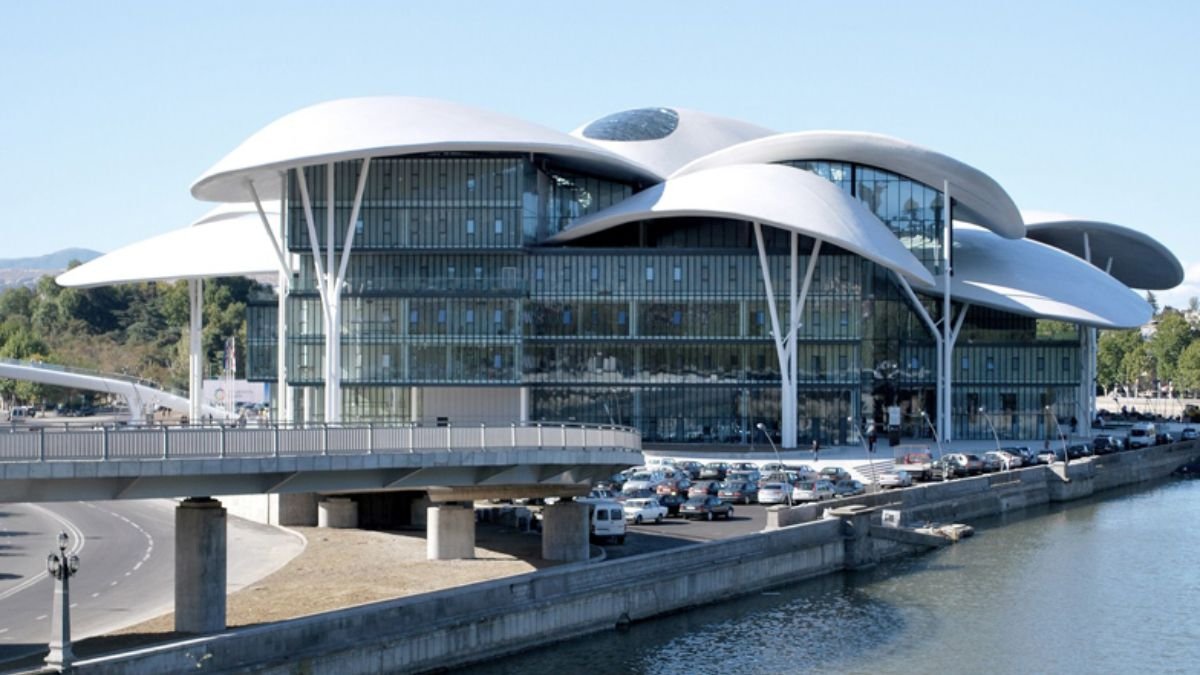
The National Bank of Georgia kept its key monetary policy rate unchanged at 8.25% during its June 2026 meeting. The decision reflects the central bank’s cautious approach as inflation remains above target while the economy continues to show strong growth.
Inflation Remains Above Central Bank Target
Georgia’s headline inflation rose to 5.7% in May, standing well above the central bank’s official 3% target. The increase was mainly driven by higher energy costs and continued disruptions in supply chains.
Inflation is expected to stay elevated throughout the second quarter of the year. For 2026, average inflation is projected at around 4.9%, suggesting that price pressures may take time to ease fully.
Strong Economic Growth Continues
Despite inflation concerns, Georgia’s economy remains resilient. Economic activity expanded by 6.2% in April, while overall growth has averaged 8.3%. This strong performance shows that domestic activity remains solid, even as external risks continue to weigh on the outlook.
Global Uncertainty Remains a Key Risk
The central bank continues to monitor global conditions closely. Ongoing uncertainty, especially around geopolitical tensions, could affect inflation and economic stability.
If geopolitical conflicts intensify, commodity prices may rise further. That would likely keep inflation above the target for a longer period and could force policymakers to maintain a tighter monetary stance.
On the other hand, if commodity prices remain stable, inflationary pressure could ease more quickly, giving the central bank more room to normalize policy over time.
Future Policy Outlook
Future decisions by the National Bank of Georgia will depend heavily on geopolitical developments, inflation trends, and commodity price movements. If tensions remain high or conflicts continue, the bank may keep policy restrictive. However, if global conditions improve and inflation slows, monetary policy could gradually move toward normalization.
The National Bank of Georgia’s decision to hold the policy rate at 8.25% shows its focus on controlling inflation while supporting economic stability. With inflation still above target and global risks uncertain, policymakers are likely to remain cautious in the months ahead.
With Georgia Leaning Toward Russia, Former President Calls for Fresh U.S. Engagement
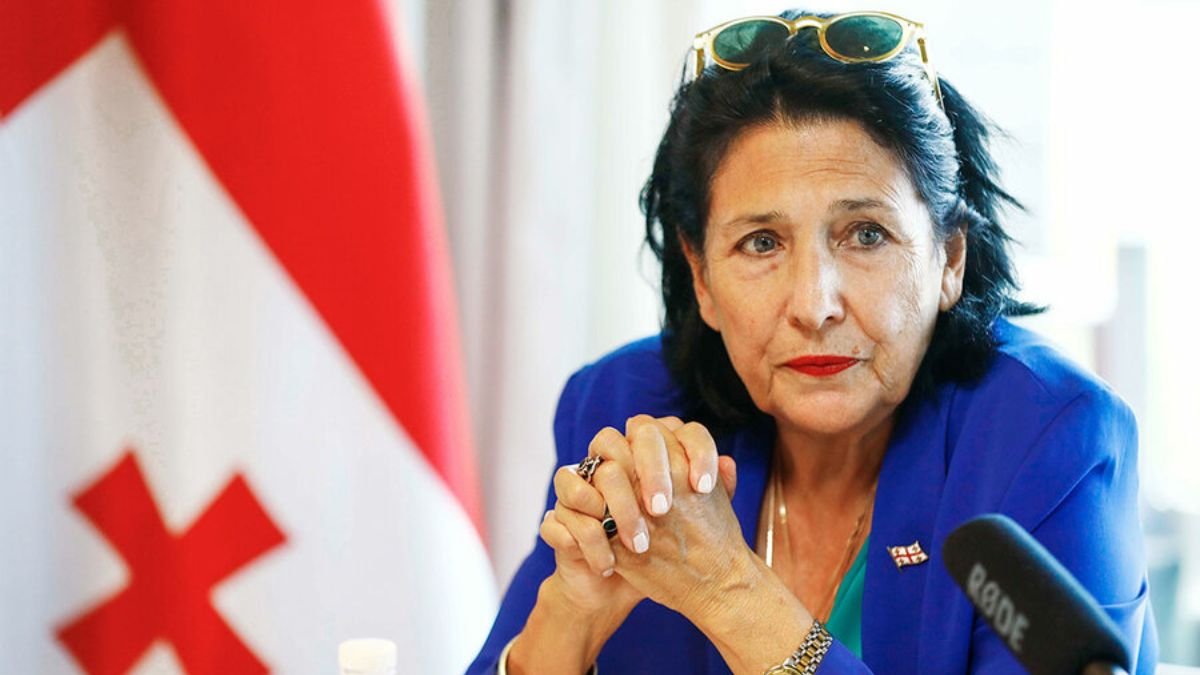
As Washington tries to move the risk of a broader conflict with Iran into the background through diplomacy, Georgia is urging Western leaders not to lose focus on the Caucasus. The small but strategically important country sits just north of Iran and has become increasingly significant in regional power politics.
At the same time, Georgia’s pro-democracy protesters have remained active for more than 560 days, demonstrating against what they view as the country’s steady democratic decline.
For Georgia’s opposition and civil society groups, any easing of Middle East tensions could give the United States and its allies more room to refocus on Georgia’s internal crisis. They argue that the country is facing growing authoritarian pressure and expanding Russian influence through the ruling political establishment.
Salome Zurabishvili Warns Against Ignoring Georgia
During a June 16 interview in Washington, Georgia’s fifth president, Salome Zurabishvili, warned that Western inattention could effectively hand Georgia over to Moscow’s sphere of influence.
Zurabishvili said Georgia should not be treated as a minor issue on the edge of Europe’s political map. Instead, she argued that Tbilisi is becoming increasingly important to the strategic balance across the Caucasus.
Her remarks came shortly after she received Freedom House’s 2026 Mark Palmer Prize, an honor she said carried major symbolic importance for Georgia’s civil society. After nearly two years of protests and increasing pressure on activists, Zurabishvili said the award showed that Georgian democrats had not been forgotten.
Political Crisis After 2024 Elections
Zurabishvili’s presidential term ended on December 29, 2024, during a deep political crisis. She had refused to recognize the results of the October parliamentary elections and left the presidential palace on the same day her successor was sworn in.
Her latest comments come as the ruling Georgian Dream party attempts to present itself as a necessary regional partner during Middle East instability. The party has also pointed to a recent phone call with U.S. Secretary of State Marco Rubio as a sign of improving relations with Washington.
Zurabishvili rejected that interpretation, describing the move as political performance. She argued that Georgian Dream has tried to lobby in Washington while also maintaining relationships with forces opposed to Western interests.
Georgia Described as a Growing Gray Zone
Zurabishvili said she believes Georgia’s current government no longer follows a truly independent foreign policy. In her view, the ruling party shapes its actions around what Russia will allow.
She described Georgian Dream’s foreign policy as inconsistent and opportunistic, sometimes aligning with countries such as Hungary and Slovakia, while also attempting occasional resets with the United States and the European Union.
However, her biggest concern was not only diplomacy but infrastructure and enforcement. Zurabishvili warned that Georgia is increasingly becoming a “gray zone” where sanctions enforcement, financial oversight, and border controls are difficult to monitor.
She pointed to cases involving foreign nationals obtaining Georgian documents, loosely regulated cryptocurrency activity, and ships connected to Russia’s so-called shadow fleet arriving at Georgian ports.
She also raised concern over more than 100 weekly flights between Georgia and Russia, saying the large volume of movement raises questions about whether enforcement systems can properly track and control activity.
According to Zurabishvili, the danger is not simply crime but strategic vulnerability. She suggested that weak oversight could allow Russian networks and sanctioned actors to exploit Georgia’s systems.
Concerns Over Russia-Style Political Control
Zurabishvili also warned that Georgia’s domestic political environment has deteriorated sharply. She said parliament now functions largely as a rubber stamp, while opposition figures face increasing legal pressure and new laws make dissent more risky.
One of her strongest concerns involves efforts to ban opposition parties through Georgia’s Constitutional Court. Such a move, she argued, could severely reduce political competition before future elections.
She also claimed that hundreds of people she described as prisoners of conscience remain detained. In her view, Georgia’s system is beginning to resemble Russia’s model of political control.
However, Zurabishvili stressed that Georgia remains different from Russia in one important way: its civil society is still active, organized, and willing to resist.
Protest Movement Remains Active
For nearly two years, protesters have continued demonstrating against what they see as Georgia’s movement toward authoritarian rule. Zurabishvili said this resilience is now meeting a changing geopolitical environment.
She pointed to recent action by the U.S. House of Representatives, which passed legislation aimed at countering Russian, Chinese, and Iranian influence across the Caucasus. To her, this suggests Washington may finally be paying closer attention to the region’s shifting power dynamics.
Still, Zurabishvili questioned why legislation was necessary for the West to recognize the urgency of the problem.
Hybrid Threats and Political Instability
Zurabishvili argued that while Western countries have adapted to Russia’s military threat, they remain behind in responding to the Kremlin’s hybrid tactics. These include disinformation, political influence operations, economic pressure, and the use of artificial intelligence to interfere in democratic systems.
Looking ahead, she suggested that Georgian Dream could be entering a more unstable period. She pointed to arrests within the ruling party’s own ranks and signs of political anxiety as possible evidence that confidence inside the party is weakening.
She also said Russia’s image has changed because President Vladimir Putin no longer appears as strong in Europe as he once did.
Possible Snap Elections and Opposition Challenges
Zurabishvili warned that this political uncertainty could increase the chance of early elections in Georgia. However, she also cautioned that the opposition remains divided and may not yet be fully prepared for such a contest.
To challenge what she sees as a consolidated authoritarian system, she said Georgia’s opposition needs more than standard electoral competition. In her view, it needs a broader united national front.
For Salome Zurabishvili, Georgia’s democratic future must ultimately be decided by Georgians. However, she believes Western allies have a responsibility to recognize the wider strategic importance of the country.
If Iran moves lower on Washington’s foreign policy agenda, she argues, the Caucasus could become the next major test of Western resolve. Georgia, positioned between competing regional powers and facing internal democratic pressure, may prove far more central to future geopolitical struggles than many Western leaders currently realize.
Rep. Mike Collins Wins Georgia GOP Runoff in Senate Race
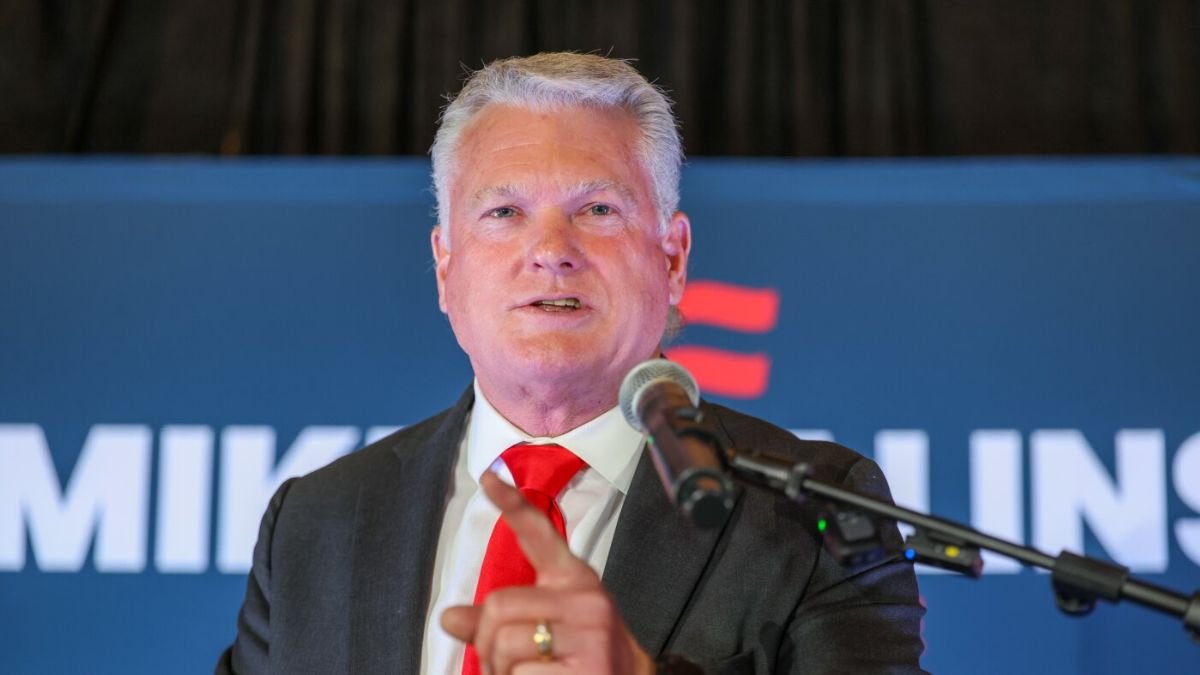
Rep. Mike Collins has won the Republican Senate runoff in Georgia, according to a projection from NBC News, officially setting the stage for a major general election battle against Democratic Sen. Jon Ossoff.
The Georgia Senate race is expected to become one of the most closely watched and expensive contests in the country, with both parties viewing the seat as crucial to the fight for control of the U.S. Senate.
Collins Defeats Derek Dooley in GOP Runoff
Collins defeated former college football coach Derek Dooley in the Republican runoff. The victory also marks a political win for President Donald Trump, who endorsed Collins only days before the runoff election.
Dooley, meanwhile, had the support of Republican Gov. Brian Kemp, who campaigned aggressively on his behalf. Kemp argued that Republicans needed an outsider candidate to beat Ossoff in November.
The runoff was triggered after no candidate secured a majority in the May 19 Republican primary.
Jon Ossoff Prepares for a Tough Re-Election Fight
While Republicans battled through the primary and runoff, Ossoff has been preparing for what is likely to be a highly competitive campaign.
Ossoff is the only Democratic senator seeking re-election in a state that Trump won in 2024. That makes Georgia a must-win contest for Democrats, who are aiming for a net gain of four seats to regain control of the Senate.
Ossoff first won his Senate seat in a runoff after the 2020 election, defeating Republican Sen. David Perdue in January 2021 by just over one percentage point. That victory helped Democrats capture the Senate majority at the time.
Collins Campaigns as a Strong Trump Ally
Collins, who was first elected to the House in 2022, has positioned himself as a firm supporter of Trump and the America First agenda. During a recent debate, he described himself as a “conservative workhorse.”
He has already started sharpening his message against Ossoff. At a rally in Cumming before the runoff, Collins argued that Ossoff does not represent Georgia or reflect the state’s values. He also attacked Ossoff’s background, claiming the senator had never held what Collins called a real job and suggesting he was backed by liberal donors from states such as California and New York.
Ossoff has also begun attacking Collins, recently saying that Collins is only in Congress because his father had previously served as a congressman.
Laken Riley Act Becomes a Key Campaign Point
Collins has frequently highlighted his support for Trump and his role in authoring the Laken Riley Act, an immigration detention measure named after a Georgia nursing student killed by a Venezuelan man who entered the United States illegally.
The bill became the first legislation Trump signed into law during his second term. It also received some bipartisan support, including from Ossoff.
Collins represents a heavily Republican district and has maintained a consistently conservative profile. When asked last month whether he disagreed with any action Trump had taken during his second term, Collins joked that the only disagreement was over how many hours of sleep a person needs to function, noting that Trump gets very little sleep.
Collins said he ran on Trump’s policies, the America First platform, and what he believes those policies can do for the country.
Economy and High Costs Enter the Race
At a rally Monday night, Collins was asked about voter concerns over rising costs and Trump’s handling of the economy. He suggested that economic conditions would improve soon.
Referring to an agreement aimed at ending the war with Iran, which had contributed to higher gas prices, Collins said it appeared the Iran deal was complete. He later added that while gas prices remained too high, he expected them to begin falling soon.
Ethics Probe and Campaign Controversies
Ossoff has signaled that he plans to focus on a House Ethics Committee investigation involving Collins. The probe is looking into whether Collins misused congressional funds by allegedly paying a former aide for campaign-related work and employing the aide’s girlfriend despite claims she did not perform official duties.
Collins has dismissed the allegations as false.
The former aide, Brandon Phillips, who served as Collins’ chief of staff, was removed from both the campaign and congressional office after posting a disparaging message from Collins’ campaign account on X.
At Collins’ Monday rally, a supporter asked how he planned to respond to the issues that had appeared repeatedly in campaign ads from Dooley and his allies, including the ethics probe and Phillips controversy. Collins responded that he believed he could still win and said his real opponent was Ossoff.
Collins Predicts Republican Unity
Although the GOP primary battle became negative, Collins expressed confidence that Republicans would come together after the runoff.
He said Republicans often have intense primaries but ultimately unite because they share the same goal: putting a Republican in the U.S. Senate seat.
Georgia Remains a Major Battleground
Georgia has become one of the most competitive political states in the country. Trump won Georgia by only 2 percentage points in 2024, while Joe Biden carried the state by less than half a point in 2020.
That narrow history makes the Collins-Ossoff race one of the most important Senate contests of the cycle.
Spending Expected to Soar
The race is already attracting major outside spending. The two leading super PACs involved in Senate campaigns have pledged a combined $64 million for the Georgia contest, and that number could grow significantly as the election gets closer.
Ossoff currently holds a major financial advantage at the candidate level. His campaign has raised more than $80 million and had $32 million available as of April 29, according to his most recent campaign finance report.
Collins, who was required to file a more recent fundraising report because of the runoff, has raised $4.9 million and had $1.2 million in his campaign account as of May 27.
Ossoff Says He Is Ready for November
Ossoff has projected confidence about the general election, saying he believed he could defeat either Republican candidate. At a recent rally, he characterized both Collins and Dooley as corrupt political insiders and accused them of being pro-war, pro-tariff, supportive of healthcare cuts, and loyal to Trump.
Now that Collins has won the runoff, Georgia voters are set for a high-profile Senate matchup that could help determine which party controls the chamber.
Mike Collins’ runoff victory gives Republicans their nominee for one of the most consequential Senate races in the country. Backed by Trump and running on a strongly conservative message, Collins will now face Jon Ossoff in a state known for extremely close elections. With major fundraising, outside spending, economic concerns, ethics attacks, and national Senate control all in play, the Georgia Senate race is expected to remain a central focus through November.